
+92 323 3811100 [email protected] Sialkot, Pakistan
0%

A Muay Thai Shin Guards Manufacturer is more than a company that cuts foam and sews fabric. It designs, tests, and produces protective equipment for repeated striking, checking comfort, durability, fit, and impact coverage. The best manufacturers study real training conditions, from sweaty gym sessions to hard pad rounds. They examine ankle movement, calf shape, hook-and-loop strength, stitching tension, and foam recovery after compression. Small details matter. A loose strap can shift protection during a kick.

Industry data also supports the importance of reliable protective equipment. The 2024 SFIA Topline Participation Report tracks martial arts participation in the United States, although it does not separate Muay Thai from other disciplines. Grand View Research’s combat sports equipment analysis identifies protective gear as an important product category within the wider market. These reports offer useful market context, but they do not replace product testing or fighter feedback. The distinction is easy to blur.

A professional Muay Thai Shin Guards Manufacturer should therefore combine material expertise with practical experience. It may compare multi-layer foam densities, test repeated impacts, inspect seam strength, and review sizing across different leg shapes. Responsible production also requires consistent quality control, transparent material information, and dependable factory records. Independent testing can strengthen confidence, especially when performance claims appear on packaging. Still, no product is perfect. Laboratory results may not fully represent a crowded gym, humid conditions, or years of daily use. Buyers should consider certification, warranty terms, manufacturing transparency, and feedback from qualified coaches. That evidence helps separate a genuine equipment specialist from a supplier focused only on appearance.
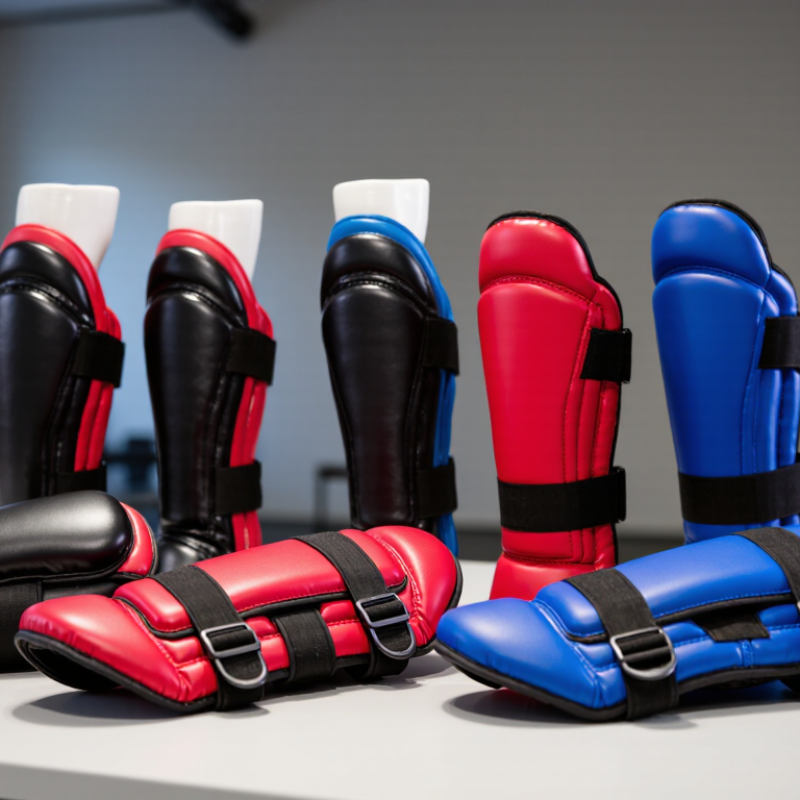
What Is a Muay Thai Shin Guard Manufacturer?

Definition and Role of a Muay Thai Shin Guard Manufacturer

A Muay Thai shin guard manufacturer designs and produces protective equipment for striking practice and competition. Its role goes beyond stitching foam and fabric. It studies leg movement, repeated impact, sweat, and stable positioning during kicks, checks, and footwork. Good manufacturers turn these practical needs into measurable specifications. They define padding thickness, foam density, closure strength, surface durability, and ankle mobility. The details matter.

Experienced teams often work with coaches, athletes, and product testers before releasing a model. A tester may complete pad rounds, bag work, and controlled sparring while recording pressure points or guard movement. Factory technicians inspect seam alignment, stitching consistency, padding recovery, and strap attachment. Some facilities use impact tests and batch records for traceability. However, laboratory results cannot replace real training feedback. A guard may pass testing yet feel bulky on a smaller leg. That gap deserves attention.

A reliable manufacturer also provides clear sizing charts, material information, care instructions, and quality-control records. It should explain limitations instead of promising perfect protection. Fit depends on calf shape, training intensity, and strap adjustment. Small faults can become large problems. Buyers should ask about sample approval, inspection procedures, replacement policies, and production consistency. A manufacturer’s authority comes from repeatable evidence, not polished claims. Honest review remains necessary, because even well-designed shin guards may need changes after extended use.

Materials and Construction of Muay Thai Shin Guards

What Is a Muay Thai Shin Guard Manufacturer?

A Muay Thai shin guard manufacturer turns material choices into protective equipment for repeated impact. The process begins with shell selection. Full-grain leather offers a firm feel and can age well, while synthetic leather usually dries faster and costs less. Neither option is automatically better. The right choice depends on training frequency, sweat, budget, and care habits. I have found that poor sizing causes more problems than material alone.

Inside, layered foam matters. A dense outer layer spreads force across the shin, while softer foam improves comfort around the ankle and instep. Reliable construction uses reinforced stitching, stable seams, and padding that does not shift during kicks. Manufacturers should check compression, flex points, hook-and-loop strength, and edge finishing. Small gaps can expose skin. That detail is easy to miss.

Fit testing should include movement, not just a standing measurement. The guard must stay centered during pivots, checking kicks, and repeated knee lifts. Ventilation panels may reduce trapped heat, but openings can weaken structure if placed carelessly. My own preference has changed after long sessions; a slightly heavier guard sometimes feels steadier, yet tires the leg sooner. No design is perfect. A manufacturer should record material batches and inspect stitching before packing.

Manufacturing Process and Quality Control Standards

A Muay Thai shin guard manufacturer converts protective design into a repeatable, tested product. The process usually begins with measurements from multiple leg sizes. Designers then select layered foam, a moisture-resistant lining, and durable synthetic leather or hide. The guard is shaped around the shin and instep, while hook-and-loop straps control movement during training.

Quality control must continue beyond visual inspection. Staff check foam thickness, stitching density, strap strength, shell alignment, and finished weight. A practical factory test may compress the guard repeatedly, pull each strap, and inspect seams after impact simulations. ISO 2859-1 sampling can guide batch inspections, while ISO 9001 supports documented procedures and corrective actions. The ISO Survey 2022 recorded 1,265,216 ISO 9001 certificates worldwide, showing how widely structured quality systems are used.

Fit remains difficult to measure. A guard can pass a laboratory check yet shift during clinching or sweating. That weakness deserves honest review. Manufacturers should test samples on different leg shapes, not only mannequins. The 2024 SFIA Topline Participation Report recorded about 6.1 million U.S. martial-arts participants, suggesting broad demand for consistent sizing. However, participation data does not prove protection quality. Experienced testers should record pressure points, ankle movement, heat buildup, and strap slippage after repeated rounds. Small defects matter. A loose stitch near the instep may become a serious failure during daily use.

What Is a Muay Thai Shin Guard Manufacturer? - Manufacturing Process and Quality Control Standards
Manufacturing Stage Typical Activity Quality-Control Checks Records or Acceptance Basis
Product specification Define intended use, size range, pattern, materials, protective coverage, closure design, and care instructions. Review the approved specification and confirm that drawings, sample references, and material requirements are consistent. Controlled product specification, revision history, and approved reference sample.
Material sourcing and incoming inspection Source outer fabric or synthetic leather, foam, lining, thread, hook-and-loop tape, and elastic components. Check material identity, color, thickness, visible damage, odor, and quantity against purchasing requirements. Verify supplier documentation where required. Incoming inspection records and material documentation appropriate to the destination market and product claims.
Pattern preparation and cutting Lay out and cut material pieces for the shin panel, instep section, lining, straps, and reinforcement areas. Compare cut pieces with pattern dimensions; check for clean edges, correct orientation, and missing or damaged pieces. Pattern revision, cutting inspection, and recorded measurements against the approved design tolerances.
Foam preparation Cut or shape cushioning layers to provide the specified coverage and fit. Inspect foam thickness, shape, density consistency, and placement. Check that edges are not visibly torn or compressed before assembly. Material specification and sample-based inspection; any numerical limits should be set in the product specification.
Panel assembly and stitching Join the cover, lining, padding, and reinforcement panels using the specified seam construction. Check seam alignment, stitch continuity, skipped stitches, loose threads, seam puckering, and exposed or sharp edges. Workmanship checklist and approved sample. Stitch strength targets, if used, are defined by the manufacturer’s product requirements.
Strap and closure attachment Attach elastic straps and hook-and-loop closures to secure the guard around the leg. Inspect placement, attachment stitching, usable strap length, closure engagement, and symmetry between the pair. Fit and closure inspection records; attachment strength may be checked using a defined internal test method.
Shape forming and pair matching Form the assembled guard to the intended anatomical shape and prepare left and right pieces as a matched pair. Check overall shape, coverage, left-right consistency, padding position, and compatibility with the approved size sample. Pair-matching checklist and size-specific measurement criteria.
Finished-product inspection Clean, trim, label, and pack the completed shin guards. Inspect for cosmetic defects, loose threads, damaged closures, uneven seams, contamination, and incorrect labels or packaging. Final inspection checklist, product identification, and packaging verification.
Performance and durability checks Use sample-based checks to assess fit, closure function, seam durability, and cushioning consistency. Conduct repeatable inspections or tests defined in the product control plan. Confirm that guards remain usable after the specified test sequence. Documented test method, sample size, results, and corrective action when results do not meet the defined criteria.
Quality-system and compliance review Manage production controls, supplier records, traceability, nonconformities, and market-specific product obligations. Review relevant procedures and records. Assess applicable chemical, labeling, and consumer-product requirements for each sales market. ISO 9001 may be used as a quality-management-system framework; it is not a product-performance certification. Applicable legal requirements depend on the destination market.
Note: There is no single universal inspection limit or certification that applies to every Muay Thai shin guard. Acceptance criteria, test methods, sampling plans, and regulatory checks should be documented for the specific product and intended market.

Product Design, Customization, and Safety Features

A Muay Thai shin guard manufacturer does more than cut foam and sew fabric. It translates fighting experience into controlled protection. Product design starts with anatomy: the tibia, instep, ankle, and foot must receive separate coverage. A rigid outer shell can spread impact, while layered EVA foam absorbs energy around the shin. The fit must stay stable during kicks, checks, and footwork.

Customization adds practical value. A manufacturer may adjust shell length, foam density, closure position, stitching, and ventilation. The fit must balance stability, comfort, and mobility. A narrow ankle opening can improve stability, but it may restrict movement. Wider straps feel easier to use, yet they can loosen during repeated rounds. These compromises need testing, not attractive claims. The European standard EN 13277-2 provides performance guidance for martial arts body protectors, although buyers should confirm the product’s exact certification scope.

Safety features should be measured under realistic conditions. Independent testing can examine impact absorption, seam strength, compression, and repeated-use durability. The 2023 Global Sports Protective Equipment market analysis by Grand View Research estimated strong market growth, driven by rising participation and safety awareness. That growth does not automatically prove better protection.

Field feedback remains essential. Coaches often notice small failures first, such as exposed instep edges or foam that shifts after heavy sparring. The World Health Organization’s injury-prevention guidance also supports a layered approach: equipment, training control, supervision, and correct fit must work together. No guard can remove every risk. Some product decisions still need reconsideration after real training.

How to Choose a Reliable Muay Thai Shin Guard Manufacturer

A Muay Thai shin guard manufacturer designs, tests, and produces protective equipment for striking practice and competition. The work involves foam selection, impact distribution, stitching, sizing, and quality control. It is not simply cutting synthetic leather around padding.

Reliable selection begins with evidence, not attractive catalog photos. The McKinsey Sporting Goods 2024 report expects the global sporting goods industry to grow about 5% annually from 2021 to 2025. This growth increases supplier choices, but it can also hide rushed production.

Ask for factory audit records, material specifications, and recent batch-testing results. Confirm foam density, shell thickness, closure strength, and size measurements. Request samples from different production batches. One sample proves very little.

During evaluation, wear the guards through repeated drills. Check whether the padding shifts after kicking a heavy bag. Inspect ankle coverage, hook-and-loop seams, and exposed edges.

The Global Sports Protective Equipment Market report by Research and Markets identifies product safety, durability, and online purchasing as major market factors. That supports careful physical inspection before a large order.

A dependable manufacturer should explain its failure rate and replacement process clearly. No factory is flawless. I would distrust anyone claiming zero defects. Honest reporting is more useful than perfect marketing. Also review lead times, communication records, and corrective-action procedures. Cheap pricing may reflect thinner foam, unstable stitching, or weak inspection rather than efficiency.

FAQS

What materials are commonly used in Muay Thai shin guards?

Full-grain leather feels firm and can age well. Synthetic leather dries faster and usually costs less. Neither material always wins.

Why does foam layering matter?

Dense outer foam spreads impact across the shin. Softer inner foam cushions the ankle and instep. Small gaps can expose skin.

How should shin guards fit?

Test them while pivoting, checking kicks, and lifting your knees. The guard should stay centered. Standing still is not enough.

Which construction details deserve close inspection?

Check reinforced stitching, stable seams, firm closures, and smooth edges. Look for shifting foam after repeated movement. Tiny flaws matter.

Can manufacturers customize shin guards?

They may adjust shell length, foam density, strap placement, stitching, and ventilation. Every adjustment creates a compromise. Wider straps may loosen.

How can ventilation affect protection?

Ventilation panels can reduce trapped heat during long sessions. Poorly placed openings may weaken the structure. More airflow is not always better.

How can buyers evaluate a reliable manufacturer?

Request material specifications, factory records, and recent batch-testing results. Ask for samples from different batches. One sample proves very little.

What should be tested during real training?

Wear the guards during heavy-bag drills and repeated footwork. Check ankle coverage, exposed edges, seams, and foam movement. Field testing reveals overlooked problems.

Does higher price guarantee better protection?

No. Price may reflect materials, inspection, or construction quality. Cheap pricing can mean thinner foam or weaker stitching.

Can shin guards remove every training risk?

No guard removes every risk. Correct fit, controlled training, supervision, and proper technique still matter. I sometimes overvalue equipment and underestimate fatigue.

Conclusion

A Muay Thai Shin Guards Manufacturer is responsible for designing, producing, and supplying protective equipment made specifically for Muay Thai training and competition. This role involves selecting durable materials such as genuine or synthetic leather, high-density foam, and secure fastening components. The manufacturing process typically includes pattern development, material cutting, stitching, padding assembly, and detailed quality inspections to ensure consistent protection, comfort, durability, and reliable fit.

A professional Muay Thai Shin Guards Manufacturer also develops products with practical safety features, including reinforced impact zones, stable ankle support, breathable interiors, and secure hook-and-loop closures. Customization options may include sizing, colors, logos, padding density, and packaging requirements. When choosing a reliable manufacturer, buyers should evaluate production experience, material quality, workmanship, testing procedures, customization capabilities, communication, and delivery consistency. A trustworthy supplier should provide clear specifications and maintain strict quality control throughout every stage of production.

Ethan

Ethan

Ethan is a professional marketing specialist with a strong understanding of the company’s products, customer needs, and evolving market trends. Through years of experience in market research, content strategy, and business communication, he helps transform complex product information into clear,......