+92 323 3811100 [email protected] Sialkot, Pakistan
0%

Choosing a Heavy Punching Bags Supplier in 2026 requires more than comparing prices and product photos. Global buyers need dependable construction, consistent specifications, responsive communication, and realistic delivery planning. A bag may look strong online, yet weak stitching can appear after repeated hooks and low kicks.

Boxing conditioning specialist Ross Enamait offers a useful standard: “The heavy bag does not lie.” Its performance exposes poor filling, uneven balance, and careless manufacturing. This guide examines suppliers through that practical lens. It considers canvas, synthetic leather, genuine leather, suspension straps, reinforced seams, filling density, moisture resistance, and available weights. It also considers whether a supplier can provide samples, inspection records, clear packaging details, and stable production capacity.

Small details matter.

For example, a 100-pound bag needs secure hanging hardware and a reliable load rating. A crowded container should not crush its shape during shipment. Buyers should request close-up seam images, internal filling information, carton dimensions, and replacement-part policies before placing large orders. These steps support better decisions, but they cannot remove every risk.

No supplier is perfect. Some factories communicate well but offer limited customization. Others provide impressive catalogs but respond slowly when defects appear. That difference matters for gyms, distributors, schools, and professional training facilities. The following overview compares leading Heavy Punching Bags Supplier options for quality, experience, export readiness, product range, and after-sales reliability. It also encourages buyers to question attractive claims, because a cheaper bag can become expensive when returns, delays, or damaged equipment interrupt business.
2026 Top Heavy Punching Bags Suppliers for Global Buyers

2026 Heavy Punching Bag Market: 70–150 lb Models and Buyer Segments

2026 Top Heavy Punching Bags Suppliers for Global Buyers

The 2026 heavy punching bag market is dividing around practical buyer needs. Home users often choose 70–90 lb models for compact training spaces. Small studios usually prefer 100–120 lb bags for repeated daily sessions. Larger gyms may select 130–150 lb units for powerful punches, kicks, and group classes.

Weight alone does not determine performance. A well-filled 100 lb bag can feel more stable than a poorly packed 130 lb model. Buyers should check outer material, stitching, hanging points, filling consistency, and rebound behavior. I would request production samples or independent inspection before placing large orders. Product photos rarely show movement under impact.

Global buyers also need to match the bag with local logistics. A 150 lb unit may require reinforced packaging, stronger ceiling hardware, and higher freight costs. Retail distributors may value neutral packaging and flexible order quantities. Training facilities may focus on warranty terms, replacement components, and cleaning resistance. These details matter.

Some suppliers describe every model as professional grade. That claim needs evidence. Ask for material specifications, load testing records, factory quality procedures, and clear defect policies. Measurements can vary slightly between batches, which is easy to overlook. A careful buyer should compare usable training weight, not only the advertised number.

Heavy Bag Construction: 4–6 ft Sizes, Leather, PVC, and Filling Types

Heavy Bag Construction: 4–6 ft Sizes, Leather, PVC, and Filling Types

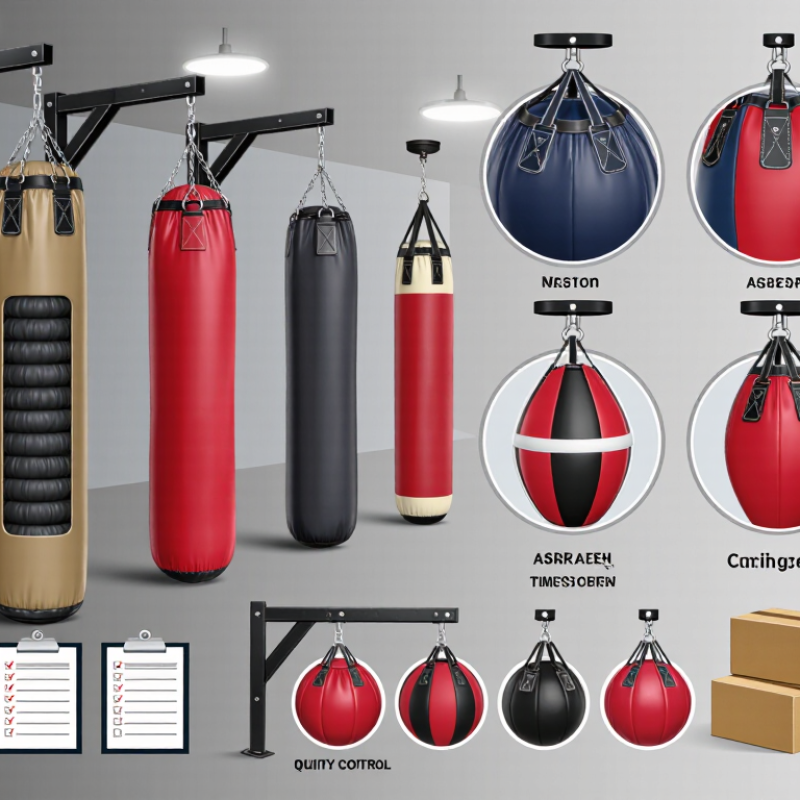
Heavy punching bags usually range from 4 to 6 feet. Size affects training purpose, stability, and shipping cost. A 4-foot bag suits compact training spaces and faster combinations. A 6-foot model offers more striking zones for punches, kicks, and body work. Longer bags also need stronger suspension points because their weight shifts during impact.

Leather covers provide a soft, durable surface when properly treated. They often feel natural under repeated strikes, but poor stitching can still cause early damage. PVC covers resist moisture and simplify cleaning. They usually cost less, although some surfaces may feel harder in cold conditions. Buyers should inspect seam width, zipper protection, webbing strength, and hanging hardware. Small construction details matter.

Filling changes the bag’s response. Textile scraps create a forgiving, dense feel when compressed evenly. Sand can add weight, but it may form hard areas without careful isolation. Foam layers improve shock absorption, while mixed fillings balance firmness and comfort. Not every supplier describes filling density clearly. Ask for weight tolerance, compression details, and sample photographs. Test the bag before placing a large order. Even a well-designed bag can feel wrong if packed unevenly. There is no perfect specification. Real training feedback may expose weaknesses that factory documents miss.

2026 Top Heavy Punching Bags Suppliers for Global Buyers - Heavy Bag Construction: 4–6 ft Sizes, Leather, PVC, and Filling Types

Nominal Size Typical Dimensions Common Outer Materials Suitable Filling Types Typical Filled Weight Recommended Use Key Construction Checks for Buyers
4 ft Approximately 120 cm high; 30–36 cm diameter Full-grain or split leather; reinforced PVC-coated synthetic leather Shredded textile, fabric offcuts, foam pieces, or layered textile and foam About 20–40 kg, depending on density and shell construction Home gyms, boxing fundamentals, speed-and-power combinations Check seam reinforcement, bottom closure, hanging straps, filling evenness, and absence of hard spots
5 ft Approximately 150 cm high; 33–36 cm diameter Leather, heavy-duty PVC, or multi-layer synthetic leather with textile backing Compressed textile, fabric-and-foam blends, or water bladder systems designed for compatible shells About 25–50 kg, depending on fill and target firmness General boxing, kickboxing, Muay Thai, and fitness training Verify load-rated chains, four- or six-point attachment, moisture resistance, and stable weight distribution
6 ft Approximately 180 cm high; 35–40 cm diameter Commercial-grade leather or thick PVC-coated fabric with abrasion-resistant backing Dense textile, textile-and-foam layers, or compatible water-filled bladder construction About 35–60 kg, with heavier configurations available by specification Full-body striking, low kicks, knees, body shots, and commercial gym use Confirm ceiling clearance, anchor capacity, impact absorption, reinforced upper seams, and shipping dimensions
Leather Shell Available across 4–6 ft formats Natural leather with stitched panels and protective backing where required Textile or textile-and-foam filling is commonly used for progressive impact absorption Varies by size, leather thickness, and fill density High-frequency training and facilities requiring a durable, premium-touch surface Inspect leather thickness, grain consistency, double stitching, edge binding, and resistance to drying or cracking
PVC Shell Available across 4–6 ft formats PVC-coated polyester or synthetic leather with heat-sealed or stitched panel construction Textile, foam, blended textile, or a separately sealed water bladder Varies by size, material thickness, and filling system Value-focused production, humid environments, clubs, and frequent cleaning cycles Check coating thickness, weld or seam quality, UV resistance, odor, flexibility, and temperature performance
Textile Filling Compatible with most 4–6 ft hanging bags Leather, PVC, canvas-backed synthetic leather, or reinforced fabric shells Clean, dry, shredded fabric or compressed textile layers Specified by final density rather than volume alone Balanced striking feel and reduced risk of sharp internal hard spots Request density data, moisture control, uniform packing, and a filling inspection sample
Foam Filling Usually used as a layer or blend in 4–6 ft bags Leather or PVC shell with an inner liner to retain foam pieces Molded foam core, shredded foam, or foam combined with textile Usually lighter than an equivalently sized sand-filled bag Lower-impact training and products requiring softer initial contact Check foam recovery, compression set, temperature stability, and resistance to bottom settling
Water-Filled System Most common in compatible freestanding or bladder-based designs Waterproof synthetic shell with a sealed, replaceable or integrated bladder Water only, retained inside a purpose-built bladder Approximately 1 kg per litre of water, excluding shell and base weight Adjustable firmness and easier emptying for selected product designs Confirm leak testing, cap security, bladder compatibility, drainage instructions, and freeze protection
Sand Filling Used only where the shell and liner are specifically designed for it Heavy-duty shell with a sealed inner liner Dry, fine sand inside a protective liner; often combined with softer material High and highly dependent on fill volume and compaction Firm resistance applications where impact hardness is specifically required Check liner integrity and uniformity; avoid unprotected sand that can create hard spots or excessive strain

Note: Dimensions, weights, materials, and filling specifications are typical commercial ranges rather than universal standards. Buyers should confirm final tolerances, load ratings, safety documentation, packaging, and test samples before placing an order.

Top Supplier Evaluation: MOQ, ISO 9001, 30–45-Day Lead Times, and OEM

2026 Top Heavy Punching Bags Suppliers for Global Buyers

Global buyers should evaluate heavy punching bag suppliers beyond product photos. MOQ affects inventory risk, cash flow, and container planning. A lower MOQ can help new distributors test demand. However, unusually low quantities may increase unit costs. Ask whether the MOQ applies per color, size, or custom design.

ISO 9001 certification shows that documented quality procedures exist, but it does not guarantee perfect bags. Request a current certificate, production records, and inspection samples. A reliable supplier should explain its 30–45-day lead time clearly. Confirm whether this period includes material purchasing, production, packing, and final inspection. Delays sometimes happen when custom fabrics or printed cartons require approval. That reality should be written into the purchase agreement.

Tips: Request one pre-production sample and one packed sample. Test stitching, hanging straps, filling consistency, odor, and surface durability. For OEM orders, provide drawings, dimensions, logo files, carton marks, and packaging requirements. Ask for photos during production. Do not approve artwork from a blurred image. I have seen small details create expensive rework. Also check export packing, spare-part policy, and shipment documents before payment. A factory may meet ISO procedures yet still misunderstand your market’s preferred weight or shape. Clear communication remains an imperfect, but essential, safeguard.

Global Compliance Standards: EN 13277, REACH, CPSIA, and ISTA 3A

For global buyers, choosing top heavy punching bag suppliers requires more than checking weight, price, and delivery time. Compliance documents should match the product’s intended use and destination market. EN 13277 can guide safety expectations for related martial arts protective equipment, while REACH addresses chemical substances in materials, coatings, and fillings. Suppliers should provide current test reports, material declarations, and traceable batch records. Old certificates may not reflect recent material changes.

CPSIA matters when a punching bag is designed or marketed for children in the United States. Buyers should request lead and phthalate testing, age grading, and accessible product warnings. ISTA 3A testing helps evaluate parcel shipping risks, including drops, vibration, and compression. A practical inspection should also check stitching, hanging straps, shell thickness, filling stability, and carton protection. We have found that packaging failures often appear before product failures. That detail is easy to overlook.

Tips: Ask for reports from qualified laboratories, not screenshots alone. Confirm the tested model matches the production model. Request sample approval before mass production. Keep photos of seams, labels, and packaging during inspection. No test plan is perfect. Supplier explanations should be clear, consistent, and updated when materials or factories change.

2026 Top Heavy Punching Bags Suppliers for Global Buyers

Global Compliance Standards: EN 13277, REACH, CPSIA, and ISTA 3A

This chart compares selected fixed chemical limits relevant to product compliance. CPSIA limits total lead in children’s products to 100 ppm and restricts specified phthalates to 0.1% (1,000 ppm). REACH uses a 0.1% w/w communication threshold for Substances of Very High Concern (SVHC) in articles. EN 13277 focuses on protective-equipment performance, while ISTA 3A defines transport-test procedures; neither provides one universal material limit in ppm. Applicability depends on product construction, intended users, destination market, and test documentation.

Reference sources: U.S. CPSC lead requirements, U.S. CPSC phthalates requirements, European Chemicals Agency REACH guidance, ISTA 3-Series testing information.

Supplier Comparison Metrics: FOB Pricing, Warranty, Defect Rates, and Logistics

For 2026 heavy punching bag sourcing, FOB price is only the opening metric. Compare quotes using identical weight, shell material, filling, packaging, and minimum order quantity. A low price may hide thinner stitching or costly pallet packaging. Request a dated quotation, sample approval, and a clear list of excluded charges.

Warranty terms need practical testing. Check coverage for seam failure, handle detachment, deformation, and leakage. A twelve-month warranty means little if shipping damage is excluded. Ask for claim response time and replacement procedures. Defect data should be separated by product code and production batch. Use an agreed acceptance standard, such as ISO 2859-1 sampling, and request independent pre-shipment inspection results. Not enough.

Logistics deserves equal weight. The World Bank’s 2023 Logistics Performance Index found that shipments averaged 44 days from export procedures to final delivery, about 60% longer than an ideal process. UNCTAD’s Review of Maritime Transport 2024 states that shipping moves over 80% of global merchandise trade by volume. Delays can therefore affect inventory more than a small FOB discount. Compare port distance, container loading plans, carton dimensions, booking reliability, and documented transit performance. Ask suppliers to show the last three shipment records, with sensitive details removed. I would not trust a perfect spreadsheet without evidence. Some buyers still compare only unit price. That habit needs reconsideration.

FAQS

What punching bag weight suits a home training space?

Home users often choose 70–90 lb models. They fit smaller rooms and support regular practice. Measure ceiling space carefully.

Which weight works better for a small training studio?

Small studios commonly prefer 100–120 lb bags. These models handle repeated sessions and moderate group use. Stability matters more than numbers alone.

Are heavier bags always better for powerful training?

No. A well-filled 100 lb bag may feel steadier than a poorly packed 130 lb model. Weight can mislead.

What should buyers inspect before placing a large order?

Check outer material, stitching, hanging points, filling consistency, and rebound behavior. Request production samples or independent inspection.

How can buyers evaluate a supplier’s minimum order quantity?

Ask whether the MOQ applies by color, size, or custom design. Lower quantities reduce inventory risk but may raise unit costs.

What does an ISO 9001 certificate prove?

It shows documented quality procedures exist. It does not guarantee flawless bags. Request a current certificate and inspection records.

How should buyers confirm a 30–45-day lead time?

Ask whether the period includes material purchasing, production, packing, and final inspection. Custom fabrics and printed cartons may cause delays.

What should an OEM order include?

Provide drawings, dimensions, design files, carton marks, and packaging requirements. Approve clear artwork, not blurred images. Small errors become expensive rework.

What testing should be completed before shipment?

Test stitching, hanging straps, filling, odor, surface durability, and packed protection. Also confirm spare parts and shipment documents.

What logistics issues affect 150 lb punching bags?

Heavy units may require reinforced packaging, stronger ceiling hardware, and higher freight costs. Freight estimates can be surprisingly incomplete.

Conclusion

The 2026 heavy punching bag market is centered on durable 70–150 lb models designed for home gyms, fitness studios, boxing clubs, and commercial training facilities. Buyers can choose 4–6 ft bags made from genuine or synthetic leather, PVC, or other reinforced materials, with filling options such as textile, foam, rubber, or blended fibers. Construction quality, stitching strength, suspension hardware, and impact absorption are key factors when selecting a Heavy Punching Bags Supplier.

Professional buyers should compare suppliers by MOQ, ISO 9001 quality systems, OEM customization, and typical 30–45-day lead times. Export readiness also includes product testing and documentation aligned with EN 13277, REACH, CPSIA, and ISTA 3A requirements where applicable. A practical supplier review should examine FOB pricing, warranty coverage, historical defect rates, packaging performance, shipping efficiency, and after-sales support. By balancing product specifications, compliance, production reliability, and total logistics costs, global buyers can establish a stable sourcing plan for 2026.

Amelia

Amelia

Amelia is a dedicated marketing professional with a deep understanding of the company’s products, customers, and industry landscape. Through clear communication and thoughtful market research, she helps translate complex product features into practical value for businesses and everyday users. Her......