
Choosing the 2026 best Private Label MMA Gloves manufacturers requires more than comparing prices or logo options. A reliable partner must understand impact absorption, wrist support, stitching strength, lining comfort, and consistent sizing. These details affect athlete safety and customer trust.
Craig Clement, co-founder of Hayabusa, has often emphasized a practical principle: “Quality is not a feature; it is the foundation.” That idea matters when reviewing private label suppliers. A polished sample can hide weak seams, uneven padding, or uncomfortable closures. Real evaluation needs repeated testing, not attractive photographs.
Look closely.
The strongest manufacturers usually provide material specifications, sample development, inspection procedures, and transparent production timelines. They should explain whether the gloves use genuine leather, microfiber, or engineered synthetic materials. They should also discuss foam density, hook-and-loop durability, odor control, and packaging requirements.
However, no supplier is perfect. Some factories communicate well but struggle with small orders. Others offer impressive customization but provide limited testing evidence. That uncertainty deserves attention. Buyers should request samples, confirm measurements, review production records, and test gloves under realistic training conditions.
This guide examines manufacturers through experience, product knowledge, manufacturing reliability, and evidence-based comparison. It does not treat the lowest quotation as the best decision. A cheaper glove may create higher return rates later. The final choice should balance protection, comfort, branding flexibility, quality control, and responsible business practices. That balance is sometimes difficult. It is also where serious buyers separate dependable partners from attractive promises.
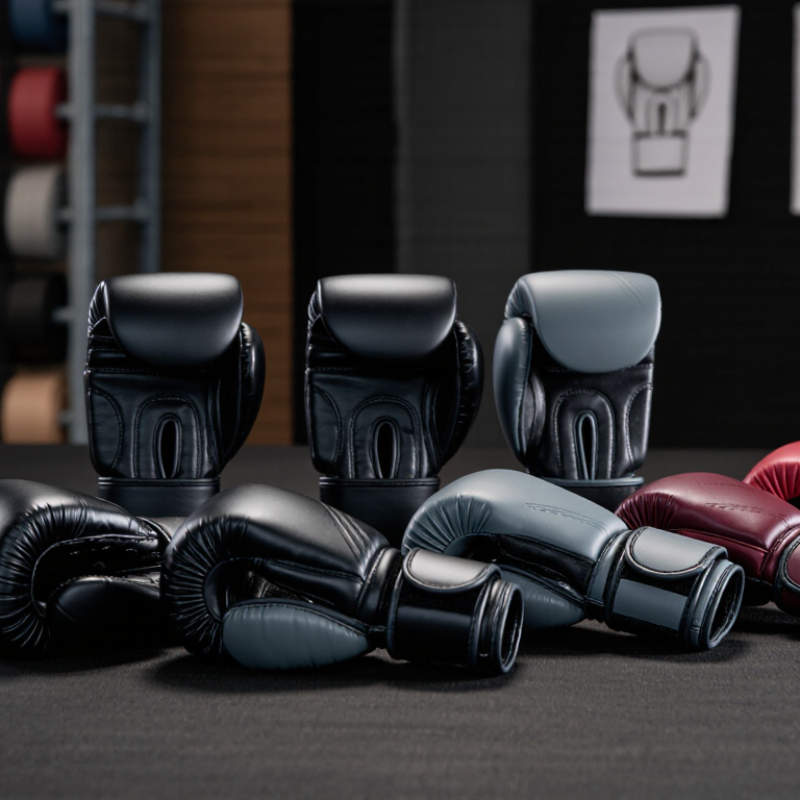
Private label MMA gloves are training or competition gloves produced by a manufacturer but sold under another company’s name. The buyer selects the design, materials, colors, sizing, and packaging. This differs from ordinary wholesale gloves, which usually use standard factory designs. A private label program gives businesses more control over product identity and customer experience.
Who uses them? Martial arts gyms often order gloves with their own logos for members and coaches. Fitness studios may choose lighter gloves for bag work and beginner classes. Online retailers, sports distributors, and fightwear businesses also use private label gloves to create a focused product range. The right glove depends on use. Sparring needs dependable padding, secure wrist support, and durable stitching. Fitness training may prioritize comfort and fast hand movement.
Manufacturers should explain foam density, synthetic or genuine leather options, closure strength, and size tolerances clearly. Product samples matter. The first sample is rarely perfect. Stitching may feel tight, or the thumb position may need adjustment. That is normal, but it must be corrected before production. Buyers should request material records, inspection photos, and consistent quality checks. Experienced manufacturers test seam strength, padding recovery, odor, and logo adhesion. They should also communicate production limits honestly. A lower price can hide thinner padding or uneven sizing. Small details matter. A glove that feels secure during repeated drills supports safer, more confident training.
The best private-label MMA glove manufacturer should prove material control, not only offer attractive samples. A 2024 Grand View Research analysis identifies synthetic leather, genuine leather, and advanced foams as key equipment materials. Microfiber leather reduces cost and simplifies cleaning. Full-grain leather may improve durability, but it needs consistent tanning and moisture control. Multi-layer foam is preferable to a single dense layer. It spreads impact more evenly. Still, thicker padding does not automatically mean safer gloves.
Design details affect training quality. A secure hook-and-loop closure should keep the wrist aligned during repeated punches. Curved fingers and separated thumb construction can improve grappling movement. Common MMA glove sizes range from 4 to 7 ounces, but sizing should follow hand circumference, not weight alone. Measure with the palm relaxed. A 2023 systematic review in Sports Medicine reported that combat-sport injuries frequently involve the hand, wrist, and head, so protection claims require evidence. Request laboratory results, material specifications, and batch records. ASTM F3447 covers MMA glove performance considerations, while local athletic commissions may apply additional requirements. Standards are not identical everywhere.
Tips: Ask for compression, seam-strength, abrasion, and impact-testing data. Confirm the foam returns to shape after repeated use. Inspect ten random samples, not one perfect sample. I would also test odor retention; suppliers often overlook it. A beautiful prototype can still fail after six weeks of sweat, twisting, and careless storage. Do not trust vague “pro-grade” language without measurable results.
When evaluating private label MMA glove manufacturers in 2026, inspect more than appearance. A clean logo cannot fix weak construction. Request production samples and examine the wrist closure, palm opening, stitching, and padding density. The glove should feel balanced during striking, not excessively stiff or loose. Ask about the foam structure, synthetic or genuine leather options, odor control, and material traceability. Reliable manufacturers should explain these details clearly.
Tips: Compare at least three samples. Test the gloves on a heavy bag and during movement drills. Check whether seams rub the thumb or split near the wrist. Request factory photos, quality-control records, and lawful safety documentation. Confirm minimum order quantities, sample fees, lead times, packaging options, and replacement procedures in writing.
A serious supplier should provide consistent measurements across different sizes. Ask how workers inspect stitching, closure strength, padding shape, and surface finishing. Small production differences can affect comfort and injury prevention. Communication also matters. Slow replies may create larger problems during revisions. Still, no evaluation is perfect; even a strong sample may not represent full production. A pre-shipment inspection is worth considering. I would also leave room for improvement, because new materials and changing training preferences can expose weaknesses later. Reliability comes from repeatable processes, honest reporting, and evidence rather than confident promises.
2026 Best Private Label MMA Gloves Manufacturers?
Private label MMA glove production starts with a controlled brief, not a logo. The 2024 SFIA Topline Participation Report recorded 5.3 million U.S. boxing participants in 2023. That audience expects comfort, fit, and dependable closure. A practical lesson from production audits is simple: define the use case first. Specify training or competition, hand circumference, target weight, padding density, shell material, wrist fastening, colors, and packaging. This brief becomes a measurable tech pack.
Manufacturers then create a sample for fit, stitching, padding, and wrist support. Ask for internal photos, not only polished product images. Check seam spacing around the thumb and palm. Measure the glove after repeated compression. McKinsey’s Sporting Goods 2024 report projected approximately 6% annual industry growth through 2025, increasing pressure on suppliers to deliver consistent quality. Speed matters, but rushed samples create expensive corrections.
Customization should cover mold shape, foam layers, lining, closure, labels, cartons, and inspection standards. Request test records for abrasion, seam strength, colorfastness, and odor control. There is no single global standard for every MMA glove, so requirements may differ by market and event authority. Confirm them before production. Typical private label orders involve a sample fee, minimum quantity, and staged payment. Lead times often change when custom molds or printed packaging are added. That detail gets missed.
A final pre-shipment inspection should compare random gloves against the approved sample. Small differences matter. A softer palm may change control. A loose hook-and-loop strap may shorten service life. The process is not flawless, and honest revision is part of reliable manufacturing.
| Process Stage | Typical Requirements | Common Customization Options | Typical Planning Range | Key Quality Checkpoints |
|---|---|---|---|---|
| 1. Product Brief | Define glove type, intended use, target market, size range, weight, budget, and estimated annual demand. | Training, sparring, competition-oriented, or hybrid MMA glove; open-palm or partially closed-palm design. | 1–3 business days for a complete specification sheet. | Confirm that the product requirements are measurable and suitable for the intended use. |
| 2. Material Selection | Select the outer shell, lining, padding, thread, hook-and-loop closure, and palm construction. | Genuine leather, polyurethane synthetic leather, microfiber, mesh ventilation panels, moisture-wicking lining, and reinforced stitching. | Material approval commonly takes 3–10 business days. | Check material thickness, flexibility, odor, abrasion resistance, color consistency, and surface adhesion. |
| 3. Size and Weight Specification | Specify hand circumference, glove dimensions, approximate finished weight, and allowable tolerances. | Common MMA glove weights include approximately 4–7 oz; custom patterns can be developed for different hand profiles. | Pattern confirmation generally requires 3–7 business days. | Verify fit, finger mobility, wrist alignment, palm opening, weight balance, and size-to-size grading. |
| 4. Padding and Protection Design | Define the foam type, density, thickness, layered construction, and impact zones. | Multi-layer foam, molded foam, segmented knuckle padding, thumb protection, and additional wrist cushioning. | Prototype padding development commonly takes 5–15 business days. | Inspect foam recovery, compression uniformity, edge transitions, knuckle coverage, and padding symmetry. |
| 5. Artwork and Private Label Details | Prepare production-ready artwork, placement drawings, color references, and labeling information. | Embroidery, screen printing, heat transfer, debossing, woven labels, hangtags, carton graphics, and custom color combinations. | Artwork approval typically takes 2–7 business days. | Review logo scale, placement, color accuracy, print adhesion, label content, and spelling. |
| 6. Prototype Development | Create a physical sample using the approved pattern, materials, padding, closure, and artwork. | One or more revision rounds may address palm shape, wrist support, finger spacing, padding profile, or color. | Approximately 10–25 business days, excluding shipping time. | Conduct hands-on fit testing, stitching review, closure testing, and comparison against the approved specification. |
| 7. Testing and Compliance Review | Establish product-specific inspection criteria and identify applicable market, labeling, chemical, and packaging requirements. | Optional testing may cover colorfastness, abrasion, seam strength, material composition, restricted substances, and packaging safety. | Testing commonly requires 5–15 business days, depending on the scope. | Do not assume that MMA gloves have one universal global safety standard; verify destination-market requirements separately. |
| 8. Order Quantity and Pricing Confirmation | Confirm quantity by size and color, packaging format, payment terms, shipping method, and production tolerances. | Low-volume pilot orders, mixed-size assortments, custom cartons, retail-ready packaging, and barcode labeling. | Indicative private-label MOQs often range from 100–500 pairs per design, subject to materials and customization. | Ensure the commercial quotation matches the approved sample and includes all customization charges. |
| 9. Pre-Production Approval | Approve the final reference sample, packaging mock-up, measurement chart, and inspection checklist. | Golden sample, sealed color swatches, approved logo files, carton marks, and documented workmanship tolerances. | Usually completed within 2–5 business days after final sample review. | Use written approval to control production consistency and reduce disputes about acceptable variation. |
| 10. Bulk Manufacturing | Cutting, printing or embroidery, foam forming, sewing, assembly, finishing, inspection, and packing. | Production sequencing can be arranged by size, color, sales channel, or launch schedule. | Typical bulk production lead time is approximately 30–60 calendar days after approval and deposit. | Monitor production-line workmanship, seam strength, padding placement, closure performance, and finished dimensions. |
| 11. Final Quality Inspection | Inspect finished goods before shipment using an agreed sampling plan and defect classification system. | Inspection can include appearance, measurements, weight, logo placement, packaging, odor, stitching, and functional checks. | Inspection normally takes 1–3 business days. | Separate critical, major, and minor defects; document photographs, counts, and corrective actions. |
| 12. Packaging and Delivery | Pack the approved quantity, complete export documentation, and arrange transportation to the destination market. | Individual polybags, paper sleeves, retail boxes, master cartons, carton labels, and shipment marks. | International transit may add approximately 5–45 days, depending on transport mode and destination. | Verify carton quantity, packing ratio, shipping marks, documents, and protection against moisture or compression. |
Note: Timelines, minimum order quantities, tolerances, and testing needs are indicative industry planning ranges. Final terms should be confirmed in writing with the selected manufacturing partner and adjusted for the destination market.
Choosing a private label MMA glove manufacturer requires more than a polished catalog. Grand View Research estimates the global sports equipment market will expand at about 5.3% annually through 2030. That growth increases supplier options, but quality can vary sharply. Ask for documented tests covering seam strength, foam recovery, wrist closure durability, and color migration. An ISO 9001 certificate shows a controlled management system, not automatic product perfection. The ISO Survey 2023 reported more than one million ISO 9001 certificates worldwide, so verify the certificate number and production scope.
Pricing should be compared by landed cost, not factory price alone. Request separate quotes for samples, custom molds, packaging, testing, freight, and tooling. A practical order review should compare quantities at 100, 500, and 1,000 pairs. Confirm the minimum order quantity, sample approval process, production timeline, replacement policy, and inspection rights. A cheap quote may hide weak foam density or inconsistent stitching. I have seen attractive samples fail when production batches changed materials. That risk deserves written controls.
Tips: Require a pre-shipment inspection with measurable limits. Check ten gloves from different cartons, not one perfect pair. Keep an approved sample for comparison. Ask for material declarations and test reports from an independent laboratory. Certifications help, but hands-on inspection still matters. Mistakes happen. A strong supplier explains them clearly.
They are gloves made by a manufacturer and sold under another company’s name. Buyers choose colors, materials, sizes, logos, and packaging.
Martial arts gyms, fitness studios, online retailers, distributors, and fightwear businesses use them. Gyms may add logos for members and coaches.
Wholesale gloves usually follow standard factory designs. Private label gloves offer more control over appearance, materials, sizing, and customer experience.
Options include synthetic leather, genuine leather, microfiber leather, and layered foam. Synthetic materials can reduce cost and simplify cleaning.
Measure hand circumference with the palm relaxed. Common glove weights range from 4 to 7 ounces, but weight alone does not determine fit.
Secure wrist closures, curved fingers, separated thumbs, durable stitching, and balanced padding can improve training comfort. More padding is not automatically safer.
Request a physical sample, material records, inspection photos, and batch checks. Examine stitching, thumb position, logo adhesion, odor, and padding recovery.
Combat training repeatedly stresses hands and wrists. Ask for seam-strength, abrasion, compression, and impact-testing data before trusting protection claims.
It can. Lower prices may hide thinner foam, uneven sizing, weak closures, or inconsistent stitching. Cheap is not always efficient.
They approve one attractive prototype too quickly. Inspect ten random samples and test gloves after repeated sweat, twisting, and careless storage. One sample proves little.
Private Label MMA Gloves are custom-branded training and competition gloves produced for fitness retailers, martial arts gyms, combat sports academies, online sellers, and established sports businesses. This guide explains how to select suitable materials, including durable synthetic or genuine leather, dependable padding, secure wrist closures, breathable linings, and practical designs for different training purposes. It also considers glove sizes, hand fit, comfort, impact protection, and relevant safety standards to help buyers make informed decisions.
Choosing the right manufacturer in 2026 requires careful evaluation of production experience, customization capabilities, communication, sample quality, factory standards, and delivery reliability. The private label process typically includes design development, logo placement, material selection, sampling, revisions, bulk production, and packaging preparation. Buyers should also review quality-control procedures, available certifications, pricing transparency, minimum order quantities, payment terms, lead times, and inspection policies. By comparing these factors systematically, businesses can develop consistent, safe, and market-ready MMA gloves that match their brand identity and customer expectations.